English
 French
 Spanish

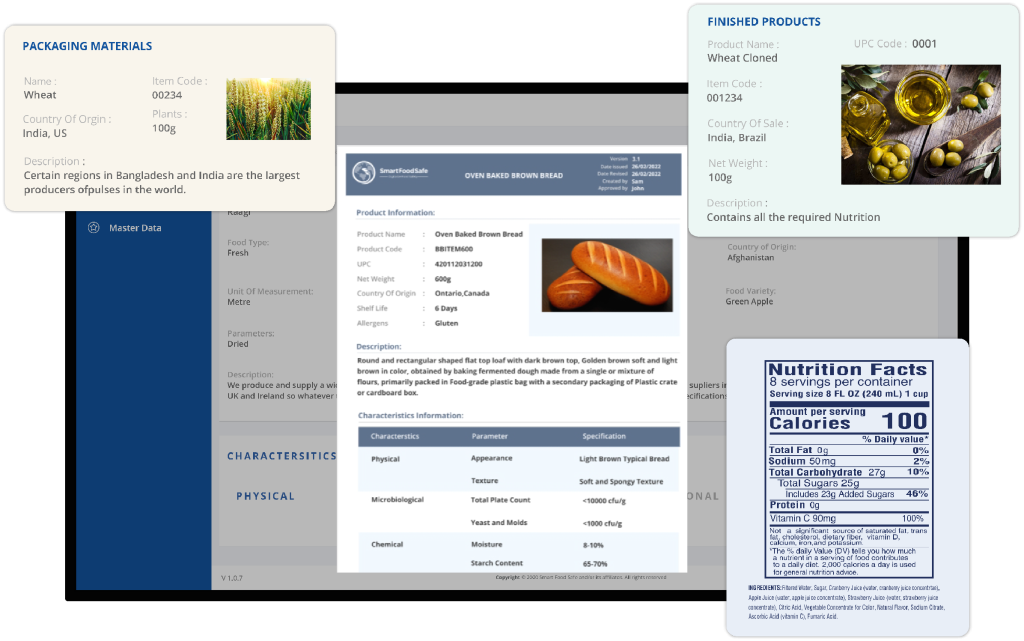
When a food manufacturing company discovered that production teams were working from an outdated allergen specification, resulting in undeclared milk protein in a supposedly dairy-free product, the consequences extended beyond the immediate product recall. The regulatory investigation, customer complaints, and reputational damage all traced back to a single point of failure: three different versions of the same ingredient specification circulating across email, shared drives, and printed binders.
Specification management software eliminates this risk by centralizing product specifications, ingredient formulations, packaging requirements, and supplier standards in a single, version-controlled system. These platforms enforce change control, maintain complete audit trails, enable cross-functional collaboration, and ensure that production, quality, procurement, and R&D teams always work from current, approved specifications. For food manufacturers managing complex recipes, allergen declarations, nutritional labeling, and regulatory compliance requirements, the difference between manual specification processes and centralized digital control is measurable in preventing recalls, faster product launches, and audit-ready documentation.
Businesses actively search for the best specification management software when they recognize that spreadsheets, shared drives, and email-based processes create unacceptable compliance and quality risks. This guide is written for food industry decision-makers, quality managers, R&D directors, and operations leaders evaluating tools to replace fragmented manual systems with scalable, audit-ready platforms.
The tools in this comparison were evaluated based on recipe and formulation management capabilities, allergen and nutritional data handling, centralized specification control, regulatory compliance support, supplier collaboration features, change management and version control, workflow automation, and practical applicability to food manufacturing environments.
How We Evaluated the Best Specification Management Software
Each platform in this guide was assessed against consistent evaluation criteria relevant to food manufacturing operations. The following factors determined how specification management systems rank:
Recipe and formulation management: Can the system manage bill of materials with ingredient tolerances, substitutions, and country-specific formulation variations? Does it calculate yields, costs, and nutritional values automatically?
Allergen and nutritional data: Does the platform maintain accurate allergen declarations across ingredients and finished products? Can it generate compliant nutrition facts labels for different regulatory markets?
Centralized specification control: Does the system provide a single source of truth for raw material, packaging, work-in-progress, and finished product specifications? Can users immediately identify the current version without ambiguity?
Regulatory compliance support: How does the platform support food safety regulations, labeling requirements, and audit documentation? Does it maintain the traceability and change history required for FSMA, HACCP, or BRC compliance?
Supplier collaboration: Can suppliers access and acknowledge specifications? Does the system track supplier-specific material variations and certificates of analysis?
Change management and version history: How does the platform track specification changes that affect formulations, allergen status, or compliance? Is there a complete audit trail showing who changed what, when, and why?
Workflow automation and approvals: Does the system enforce approval workflows before specifications reach production? Can it automate notifications to affected stakeholders when specifications change?
Best Specification Management Software
1. SmartSpec
Food manufacturers who need comprehensive specification and recipe management with integrated allergen control, nutrition labeling, supplier collaboration, and regulatory compliance workflows designed specifically for food production environments.
SmartSpec is a digital specification and recipe management platform purpose-built for the food industry. The system manages specifications for raw materials, packaging materials, work-in-progress products, and finished goods while maintaining critical food-specific data including allergen declarations, nutritional information, ingredient lists, and regulatory compliance documentation. Unlike generic specification tools adapted for food use, SmartSpec was designed from the ground up to address the unique challenges food manufacturers face when managing formulations, allergen cross-contamination risks, supplier material variations, and multi-market labeling requirements.
Why it ranks #1: SmartSpec earns the top ranking for food manufacturers by combining recipe management, allergen control, and specification governance in a workflow-driven system that understands food industry operations. While competitors like Specright focus on packaging or SafetyChain emphasizes quality inspections, SmartSpec provides the complete specification lifecycle—from formulation development through production to periodic review—with food-specific features built in rather than bolted on. The platform’s global allergen database, nutrition label generation, bill of materials linking with recipe tolerances, and supplier-to-material connections address the practical realities of food manufacturing. Organizations searching for the best specification management software for food production find that SmartSpec eliminates the need to piece together separate systems for recipes, allergens, specifications, and supplier data.
Key features
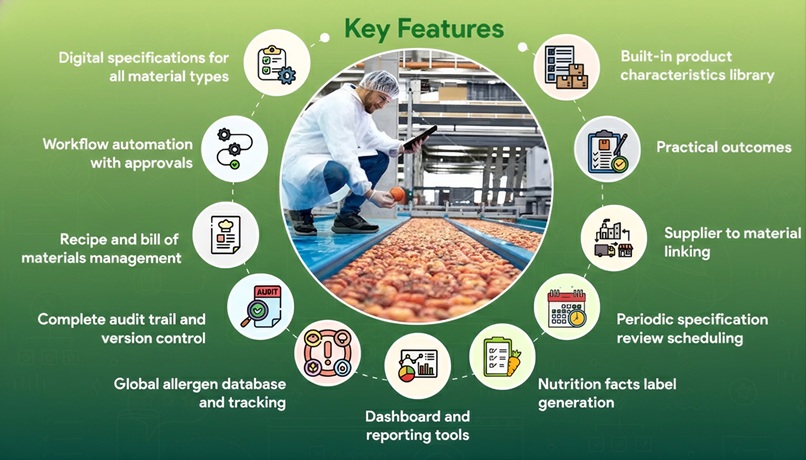
Digital specifications for all material types: The platform maintains structured specifications for raw materials (ingredients, additives, processing aids), packaging materials (primary, secondary, tertiary), work-in-progress items, and finished products. Each specification type includes relevant fields and validation rules specific to that material category, ensuring completeness and consistency.
Recipe and bill of materials management: Formulate product recipes by linking materials to finished products with usage quantities and tolerances. The system supports country-specific ingredient preferences, allowing manufacturers to use different suppliers or materials in different markets while maintaining the same core recipe.
Global allergen database and tracking: SmartSpec maintains a continuously updated global allergen list covering country-specific allergen requirements across major markets. The system automatically tracks allergen status from ingredient specifications through finished product declarations.
Nutrition facts label generation: Generate compliant nutrition facts labels based on recipe formulations and ingredient data. Labels can be formatted for different regulatory markets and attached directly to product specifications.
Supplier-to-material linking: Establish direct connections between approved suppliers and specific materials, enabling tracking of supplier-specific specifications, certificates of analysis, and supply chain risk.
Workflow automation with approvals: Configure approval workflows based on specification type or change impact. Specifications cannot reach production until all required approvals are completed.
Complete audit trail and version control: Every specification change is logged with user, timestamp, and reason. Version history supports FSMA, HACCP, BRC, and other food safety standards.
Dashboard and reporting tools: Monitor specification status, pending approvals, allergen exposure, and compliance gaps through configurable dashboards and reports.
Periodic specification review scheduling: Automatic alerts notify responsible users when specifications require scheduled review, preventing expired specifications from remaining in use.
Practical outcomes: SmartSpec eliminates outdated formulations, prevents undeclared allergen incidents, improves supplier visibility, enforces controlled change management, and delivers audit-ready documentation without manual effort.
2. SafetyChain
Food processors and manufacturers who need specification management tightly integrated with quality management, food safety programs, and production floor inspections.
SafetyChain is a comprehensive food safety and quality management platform that includes specification management as part of a broader operational suite. Specifications are tightly connected to HACCP programs, CCP monitoring, quality inspections, and corrective actions.
Key features
Specifications linked to quality inspections: Specifications connect directly to receiving, in-process, and final inspections. Changes automatically update acceptance criteria.
HACCP and food safety integration: Critical limits defined in specifications link directly to monitoring and deviation alerts.
Supplier management and COA tracking: Supplier COAs are captured and validated against specification requirements.
Mobile access for production teams: Specifications are accessible on tablets and mobile devices across operations.
Non-conformance and corrective action tracking: Specification failures trigger corrective action workflows with root cause analysis.
Compliance reporting and audit trails: Reporting supports GFSI, SQF, and customer audits with version control and traceability.
3. Specright
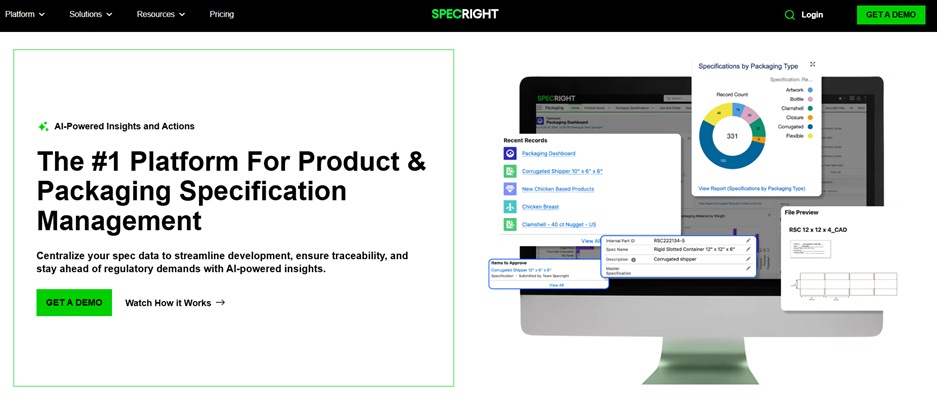
Consumer packaged goods companies manage extensive packaging specifications, formulations, and supply chain data across multiple suppliers and contract manufacturers.
Specright is a specification data management platform built specifically for the CPG industry with emphasis on packaging specifications and supplier networks. The system focuses on packaging specifications, ingredient declarations, nutritional data, and supplier performance rather than general-purpose specification management.
Key features
Formulation management with costing: Recipe and formulation specifications include ingredient sourcing, allergen declarations, and nutritional calculations.
Supplier network and collaboration: The platform includes a network of connected packaging and ingredient suppliers who can receive specifications, submit quotes, and provide certificates of analysis through the system.
Specification optimization tools: Analytics identify opportunities to consolidate SKUs, standardize materials, or negotiate better pricing based on volume aggregation across products.
Sustainability and environmental tracking: Environmental impact calculations based on material specifications support sustainability reporting and packaging reduction initiatives.
Multi-site and global specification management: Global organizations can manage regional specification variations while maintaining visibility into what differs across markets and why.
4. TraceGains

Food manufacturers who need comprehensive supplier compliance management, automated document collection, and traceability across complex supply chains with multiple suppliers and co-manufacturers.
TraceGains is a network-based supplier compliance and specification management platform that connects food manufacturers with their supplier ecosystem. The platform emphasizes automated document collection, certificate of analysis management, and supplier quality monitoring rather than internal specification development. TraceGains operates a supplier network marketplace where manufacturers can access millions of pre-loaded supplier documents and specifications, reducing manual data collection effort.
Key features
TraceGains Marketplace supplier network: Access millions of supplier documents pre-loaded in the TraceGains network. When connecting with suppliers already in the network, manufacturers can immediately access current specifications, certificates, and compliance documents without requesting them individually.
Automated certificate of analysis collection: Suppliers submit COAs through the platform with automatic notifications to manufacturers. The system can extract data from COAs and compare results against specifications, flagging out-of-specification results automatically.
Supplier compliance monitoring: Track supplier audit status, insurance certificates, regulatory registrations, and compliance documentation in a centralized dashboard. Automated alerts notify manufacturers when supplier documents expire or require renewal.
Specification templates and intelligent recommendations: Create specification templates with requirements and leverage intelligent recommendations based on supplier capabilities. The system suggests specifications and matches supplier capabilities to buyer requirements.
Collaboration tools and correspondence tracking: Communicate with suppliers through the platform with full audit trails of all correspondence. Track specification questions, change notifications, and supplier acknowledgments in a centralized system.
Version control and workflow automation: Specification versioning with configurable alerts and notifications when specifications change. Workflow automation routes specifications through approval processes and notifies affected suppliers of updates.
5. SpecPage (Revalize)
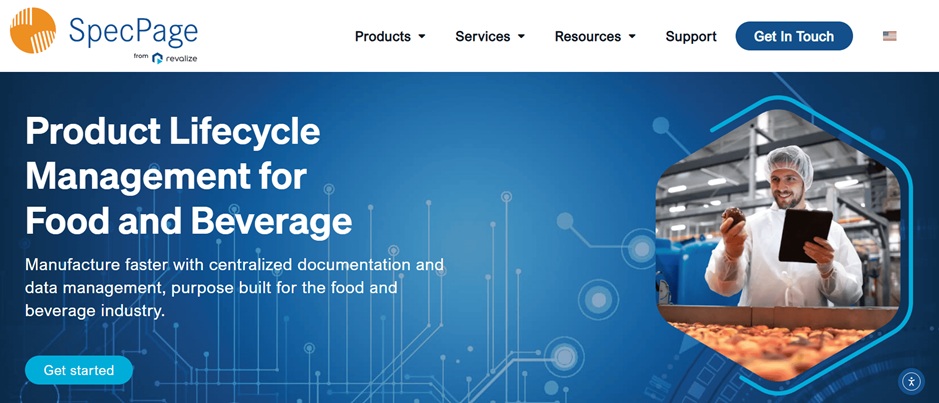
Global food and beverage manufacturers selling to major retailers who require GDSN (Global Data Synchronization Network) compliance, product information management, and comprehensive product lifecycle management across international markets. SpecPage is a product lifecycle management platform purpose-built for food and beverage manufacturers with emphasis on global retail compliance and data synchronization. The system manages product specifications, formulations, and packaging information while automating the complex requirements of GDSN data pools, retailer-specific data formats, and multi-country labeling regulations.
Key features
GDSN and retail data synchronization: Automate product data publishing to GDSN data pools for major retailers worldwide. The platform ensures product information is synchronized across retail trading partners, preventing listing errors and shelf delisting due to data quality issues.
Product information management for retail: Manage comprehensive product data including GTINs, packaging hierarchies, nutritional information, allergen declarations, and marketing content. The system formats data according to retailer-specific requirements for different markets and channels.
Multi-country compliance and labeling: Track country-specific regulatory requirements, labeling regulations, and compliance status across global markets. Generate compliant labels for different regions with automatic formatting and translation support.
Product lifecycle and change management: Manage products through lifecycle stages from development to commercialization to phase-out. Track specification changes with impact analysis showing which retailers, markets, or product variants are affected.
Formula and recipe management: Create and manage formulations with ingredient specifications, processing instructions, and quality parameters. Support for formula-based production with traceability from raw materials through finished products.
Supplier collaboration and data capture: Collect supplier specifications, certificates, and technical documentation through supplier portals. Services available for outsourced GDSN master data capture and management.
Feature-Level Comparison Breakdown
Understanding how these specification management tools compare across specific capabilities helps food manufacturers match features to their operational requirements. The following breakdown evaluates each platform against critical functionality areas.
Recipe and Formulation Management
SmartSpec: Bill of materials linking with recipe tolerances and country-specific ingredient preferences. Supports ingredient substitutions and automatic allergen rollup through recipe structures.
SafetyChain: Basic recipe management focused on quality acceptance criteria and specification limits rather than formulation development. Recipes link to inspection forms and critical control points.
Specright: Formulation specifications with ingredient sourcing and cost tracking. Supports supplier variations and contract manufacturer formulation management.
TraceGains: Basic specification management with focus on supplier-provided formulations. Limited internal recipe development capabilities compared to dedicated formulation tools.
SpecPage: Formula-based production management with ingredient specifications and processing parameters. Supports product lifecycle from development through commercialization.
Allergen and Nutritional Data
SmartSpec: Global allergen database with automatic tracking through the supply chain. Nutrition label generation with country-specific formatting and integration with recipe management.
SafetyChain: Allergen declarations on specifications with alerts when allergen status changes. Basic nutrition tracking linked to quality control and product release criteria.
Specright: Allergen tracking in ingredient and formulation specifications. Nutrition calculation available but not the platform's primary strength compared to dedicated tools.
TraceGains: Allergen declarations in supplier specifications with automated collection from supplier network. Basic nutrition tracking for compliance documentation.
SpecPage: Multi-country nutrition label generation and allergen management for global retail compliance. Automated formatting for different regulatory markets and GDSN requirements.
Specification Version Control
SmartSpec: Automatic version control with complete change history and audit trail. Version comparison and ability to track specification evolution over time.
SafetyChain: Version tracking integrated with quality management and food safety documentation. Changes trigger review of affected inspection forms and HACCP documentation.
Specright: Version history with supplier notification when specifications change. Tracks which suppliers have acknowledged updated specifications.
TraceGains: Version tracking with supplier notification and automated workflow alerts. Focus on supplier document versions and certificates rather than internal spec development.
SpecPage: Product lifecycle version control with change impact analysis across retail markets. Tracks specification changes affecting GDSN data and retailer listings.
Supplier Collaboration
SmartSpec: Supplier-to-material linking for tracking approved suppliers and material sources. Supports supplier-specific specifications and certificate management.
SafetyChain: Supplier portal for COA submission and specification acknowledgment. Integration with supplier quality programs and audit management.
Specright: Dedicated supplier network where suppliers receive specifications, submit quotes, and provide documentation. Strong supplier collaboration capabilities.
TraceGains: Network-based supplier collaboration with marketplace access to millions of supplier documents. Strongest supplier compliance and document automation capabilities.
SpecPage: Supplier portals for specification and certificate collection. GDSN data capture services and master data management outsourcing available.
Workflow and Approvals
SmartSpec: Configurable approval workflows with email and in-app notifications. Specifications cannot reach production status without required approvals.
SafetyChain: Approval workflows integrated with food safety program changes. Specification approvals trigger updates to related quality documentation.
Specright: Basic approval workflows with stakeholder notification. Focus on supplier communication rather than complex internal approval routing.
TraceGains: Configurable workflow automation for specification approvals and supplier notifications. Alerts and correspondence tracking for compliance documentation.
SpecPage: Product lifecycle stage gates and change management workflows. Approval processes for specification changes affecting retail distribution and GDSN data.
Regulatory Compliance
SmartSpec: Audit trails and documentation support FSMA, HACCP, BRC, and SQF requirements. Periodic review scheduling ensures specifications remain current.
SafetyChain: Comprehensive food safety compliance with HACCP integration and regulatory reporting. Strong audit preparation and regulatory inspection support.
Specright: Regulatory data tracking for ingredients and packaging. Supports multi-market compliance but not integrated with food safety programs.
TraceGains: Supplier compliance documentation and certificate tracking. Audit trails for supplier quality and traceability requirements.
SpecPage: Global regulatory compliance tracking across countries and retail markets. GDSN compliance, retailer-specific requirements, and multi-country labeling regulations.
How to Choose the Best Specification Management Software
Selecting the right specification management platform requires matching system capabilities to your food manufacturing operations and organizational priorities. The following decision framework guides the evaluation process for food companies.
Primary operational focus: Companies focused primarily on production operations need platforms like SmartSpec or Platform that connect specifications to daily manufacturing activities, quality inspections, and supplier management. Understanding whether your primary need is production execution, product development, or enterprise compliance guides platform selection.
Breadth of specification management needs: Food manufacturers managing only formulation and nutrition specifications can use specialized tools. Those managing raw materials, packaging, work-in-progress, and finished products across multiple categories need comprehensive platforms like SmartSpec. Consider whether you need to manage all specification types in one system or can tolerate multiple specialized tools for different purposes. Integration complexity increases when specifications are spread across multiple platforms.
Regulatory and audit requirements: Companies facing regular GFSI audits, customer quality audits, or regulatory inspections need platforms with robust audit trails, version control, and compliance documentation. The level of formality required varies: some organizations need electronic signatures and validated systems like Compleat, while others can use workflow-based approval systems like SmartSpec. Consider your audit frequency, inspector expectations, and documentation requirements when evaluating compliance capabilities.
Supplier collaboration intensity: Organizations working with many suppliers who need specification access should evaluate how each platform handles supplier collaboration. Specright's supplier network provides the strongest external collaboration. SmartSpec and SafetyChain support supplier portals for specification acknowledgment and COA submission.
Integration with existing systems: Specification data rarely exists in isolation. Consider how specifications need to connect with QMS systems for material master data, quality management systems for inspection criteria, and production systems for batch records. Some platforms offer pre-built integrations while others require custom development. The cost and complexity of integration can exceed the specification management platform cost itself. Evaluate integration requirements early in the selection process.
Organization size and growth trajectory: Small food manufacturers may find enterprise platforms like Compleat over-engineered for their needs, while rapidly growing companies should avoid platforms they will quickly outgrow. Consider both current state and three- to five-year projections for product count, facility count, user count, and operational complexity. Platform migration is expensive and disruptive, choosing a scalable solution from the start prevents future replacement costs.
The best specification management software for your organization depends on balancing these factors. Companies with broad specification needs across production operations typically benefit most from platforms like SmartSpec that combine recipe management, allergen control, supplier collaboration, and regulatory compliance in a food-specific system. Specialized tools serve niche needs well but often require supplementing with additional systems to cover all specification management requirements.
Why SmartSpec Is Ranked #1
SmartSpec earned the top ranking for food manufacturers by delivering comprehensive specification management capabilities specifically designed for food industry operations. While competitor platforms excel in specialized areas—SafetyChain for quality integration, Specright for packaging focus, Compleat for enterprise compliance—most food manufacturers need balanced functionality across the complete specification lifecycle rather than depth in a single area.
Food industry specialization: SmartSpec was purpose-built for food manufacturing rather than adapted from generic specification management or other industries. The platform includes food-specific features like global allergen databases, nutrition label generation, recipe tolerance management, and regulatory compliance tracking as core functionality rather than add-ons. This specialization means food manufacturers can implement SmartSpec without extensive customization to accommodate allergen tracking, formulation management, or multi-market labeling requirements.
Complete specification coverage: The platform manages raw material specifications, packaging specifications, work-in-progress specifications, and finished product specifications in a unified system. Organizations avoid the complexity of using separate tools for ingredients versus packaging or development formulations versus production recipes. This completeness eliminates integration challenges and ensures all specification types receive consistent version control, approval workflows, and audit documentation.
Operational workflow integration: SmartSpec connects specification management to daily operations through supplier-to-material linking, automated approval workflows, and periodic review scheduling. Production teams access current specifications, quality teams track compliance against specifications, and procurement teams understand which suppliers provide which materials. This operational integration ensures specifications support actual manufacturing activities rather than existing as isolated documentation.
Scalability without complexity: The platform scales from small specialty food producers to large multi-facility operations without requiring enterprise-level implementation effort. Small manufacturers can implement core specification management quickly, while larger organizations can add approval workflows, custom characteristics, and multi-site configurations as needed. This scalability prevents organizations from choosing between over-engineered enterprise platforms and systems they will quickly outgrow.
Organizations searching for the best specification management software for food manufacturing find that SmartSpec addresses the full range of specification management needs without requiring multiple specialized tools or extensive customization. The platform's combination of food-specific features, complete specification coverage, operational workflow support, and scalable architecture makes it the most practical choice for food manufacturers seeking to replace manual specification processes with a professional, audit-ready system.